Steadier dough, softer crumb, fewer rejects: enzymes for bread factories
Enzymehouse supplies bakery enzymes to commercial bread, bun and roll plants, to the companies that blend improvers for them, and to the distributors who serve both.
We start from the defect on your line (short volume after a flour change, sticky dough at the divider, crumb tearing at the slicer, bread firming before its code date) and match an enzyme function to it.
Wholesale and bulk supply for manufacturers and resellers. Tell us the bread type or enzyme function you need, the quantity you expect to buy and the destination country, and we will come back with a quote. Pack format, volume pricing and delivery terms are quoted per order. Request a quote
Where bread lines lose money, and where enzymes come in
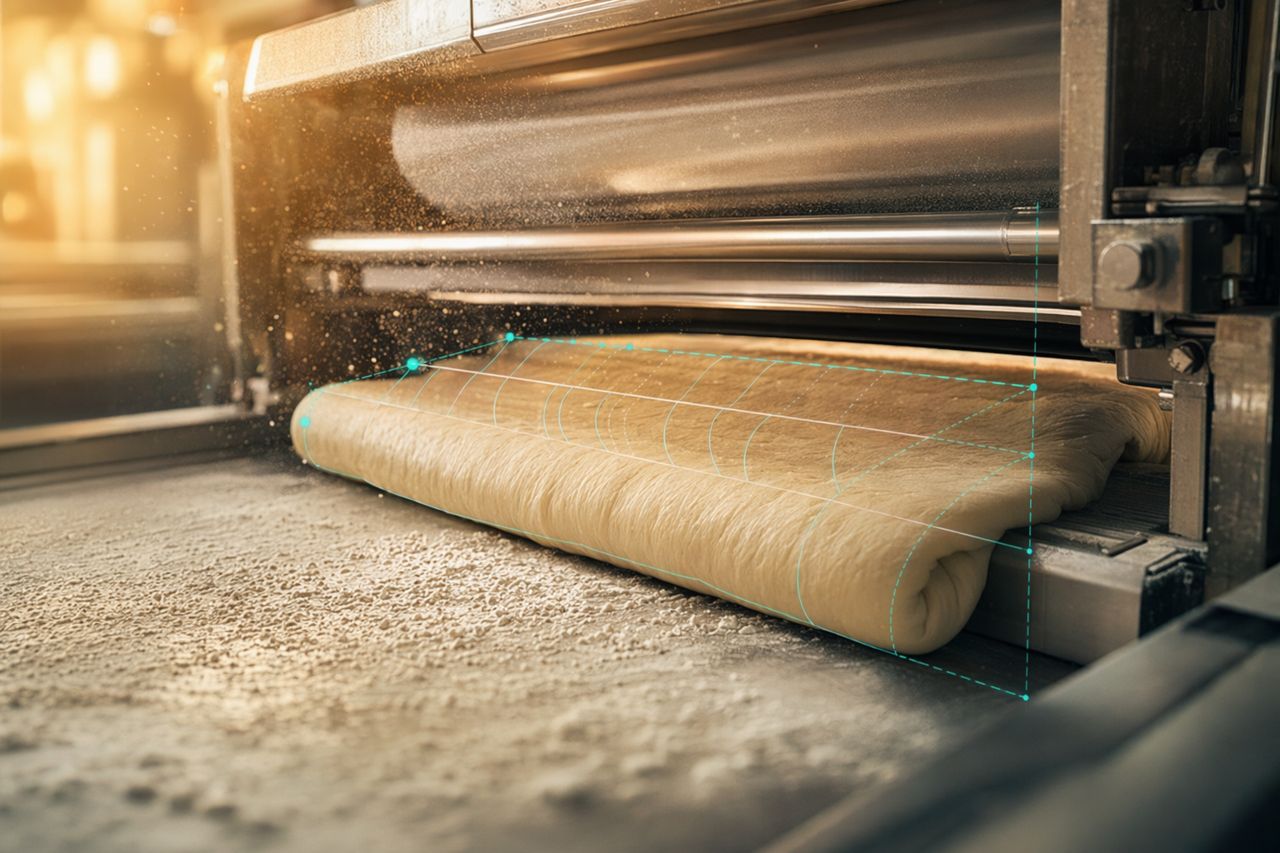
Flour changes from lot to lot, and the line drifts with it: loaves come out short on volume, the gas cells turn coarse, dough sticks on the make-up line, crumb clings to the slicer blades and the bread firms faster in storage. In the dough, enzymes act as an invisible process regulator: each one works on its own target, so a bakery can absorb flour and process variation without rewriting the whole formula. Every enzyme needs its own pH, temperature and time window, and heat stability and reaction timing differ by enzyme type and by the production stage where it has to act. The usual toolbox covers alpha-amylase, maltogenic amylase, xylanase, lipase, phospholipase, glucose oxidase and protease.
| Defect caused by flour or process drift | Where your team sees it |
|---|---|
| Lower loaf volume | Pan height and bagging checks |
| Coarse gas structure | Crumb grain at the slicer |
| Sticky dough | Divider, rounder and moulder |
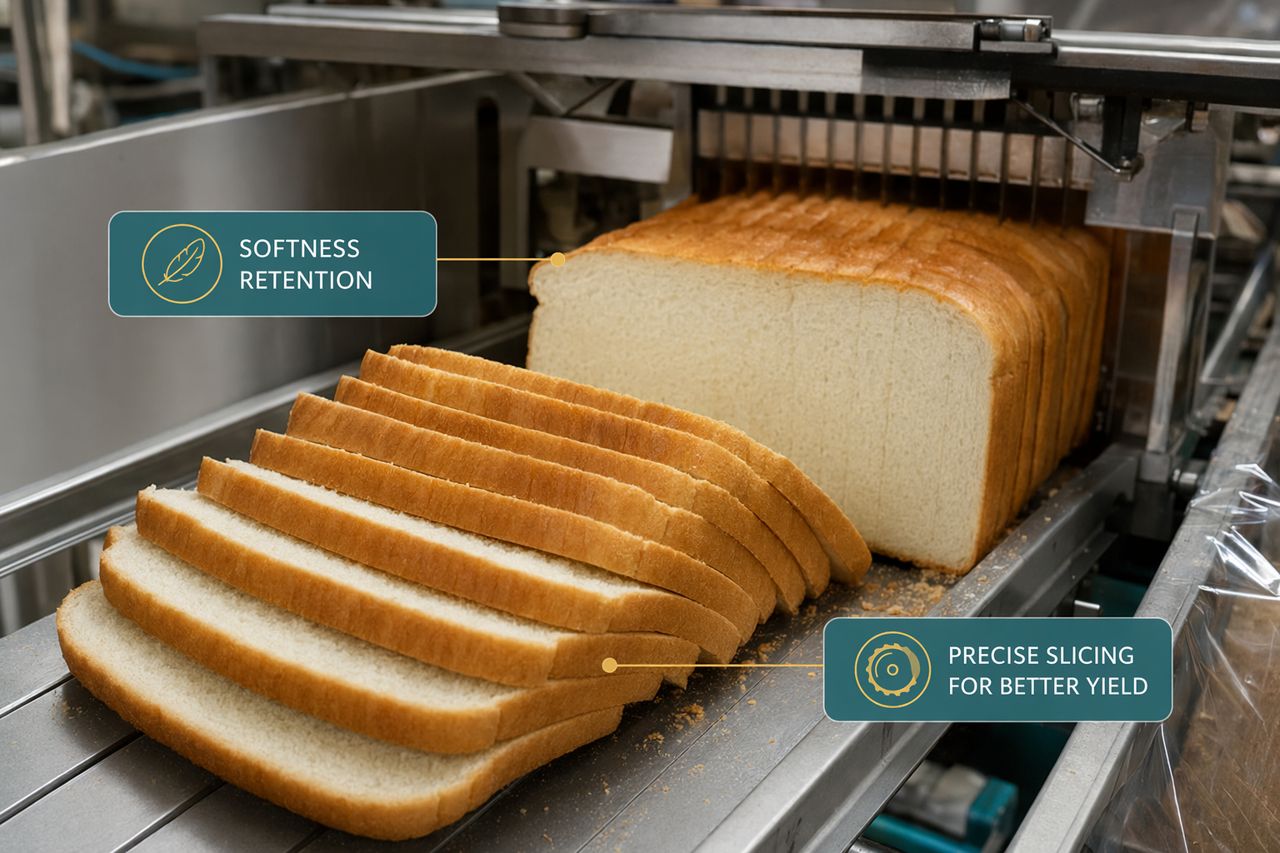
| Crumb sticking to the blades | Slicer |
| Faster crumb staling | Storage and returns from trade |
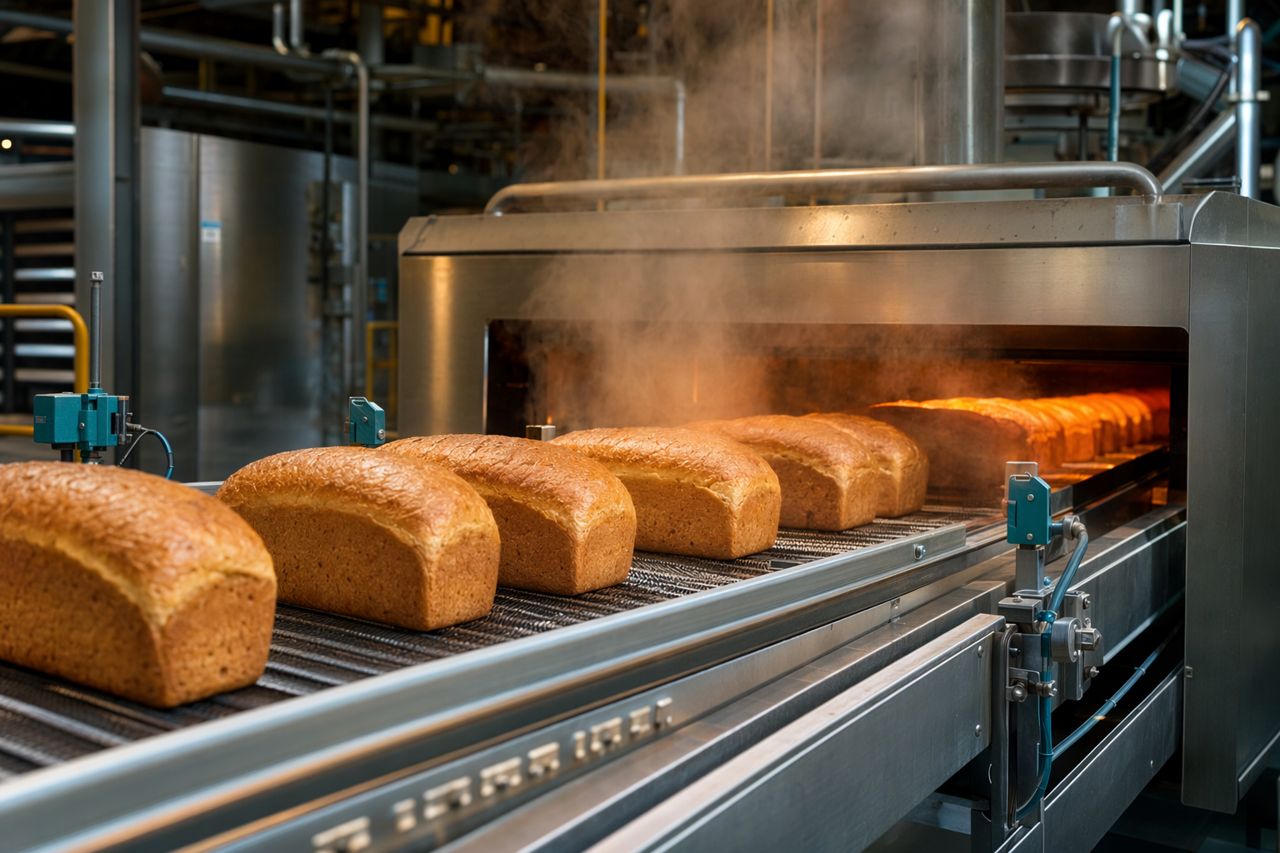
Shelf life is the second money line. Bread that stays soft for longer is bread that is sold instead of thrown away, and that longer shelf life also lowers the carbon footprint of each loaf. Bakeries that want to cut chemical additives use lipase-type enzymes as a lower-carbon alternative to the emulsifier DATEM while keeping a soft texture. Enzyme activity depends on temperature and pH and is lost during baking: the enzyme works in the dough, and the oven ends it. That is why we start every recommendation from where the defect appears on your line, not from a product list.
Who we supply
- Industrial bread, bun and roll plants running pan bread, sandwich loaves, buns, rolls, toast bread, sweet bread and frozen or par-baked formats
- Improver and premix manufacturers building enzyme functions into their own blends
- Ingredient distributors and resellers who supply bakeries in their region
- Private-label and foodservice bread programmes that need the same result across several plants
What we help you fix
| Production goal | What it protects |
|---|---|
| Dough tolerance across shifts and flour lots | Throughput, fewer line stoppages |
| Oven spring and loaf volume | Pack fill, shape and appearance at bagging |
| Crumb softness and anti-staling | Saleable shelf life, fewer returns and complaints |
| Clean slicing | Fewer ragged slices and end-of-line rejects |
| Fewer chemical additives | A cleaner label for your retail customers |
How a quote works
- Tell us the problem. Bread type, where the defect shows up (mixer, divider, proofer, oven, cooler, slicer or shelf) and what must not change in the finished product.
- We match the enzyme function. We look at your flour, process and shelf-life target before we suggest a route.
- Trial on your line. We help you set up a side-by-side trial against your current formula: dough handling, proof, volume, crumb, slicing and softness over the shelf-life window.
- Repeat supply. Once the result is confirmed, we align the specification and quote ongoing supply.
Common reasons buyers contact us
- Flour variation changing how the dough handles
- Buns collapsing, wrinkling or varying in volume
- Loaves firming earlier than expected in distribution
- Sticky dough causing divider or moulder problems
- Slicing defects after cooling
- Reformulating to remove chemical improvers
- Comparing enzyme suppliers before a new contract or a new improver range
Request a quote
Send us a short brief through the on-site form. A clear description of the line problem is enough to start. The quote comes back faster if you include:
- Product: bread type and format, or the enzyme function you need
- Quantity: approximate monthly use or the size of your first order
- Destination: the country you need it delivered to
- Problem: where it appears on the line and what improvement you want
- Constraints: flour type, clean-label requirements and shelf-life target
Wholesale and bulk supply for bread factories, improver blenders and distributors. Request a quote